How to Choose the Right Glasses Frames in Toowoomba: A Practical Guide
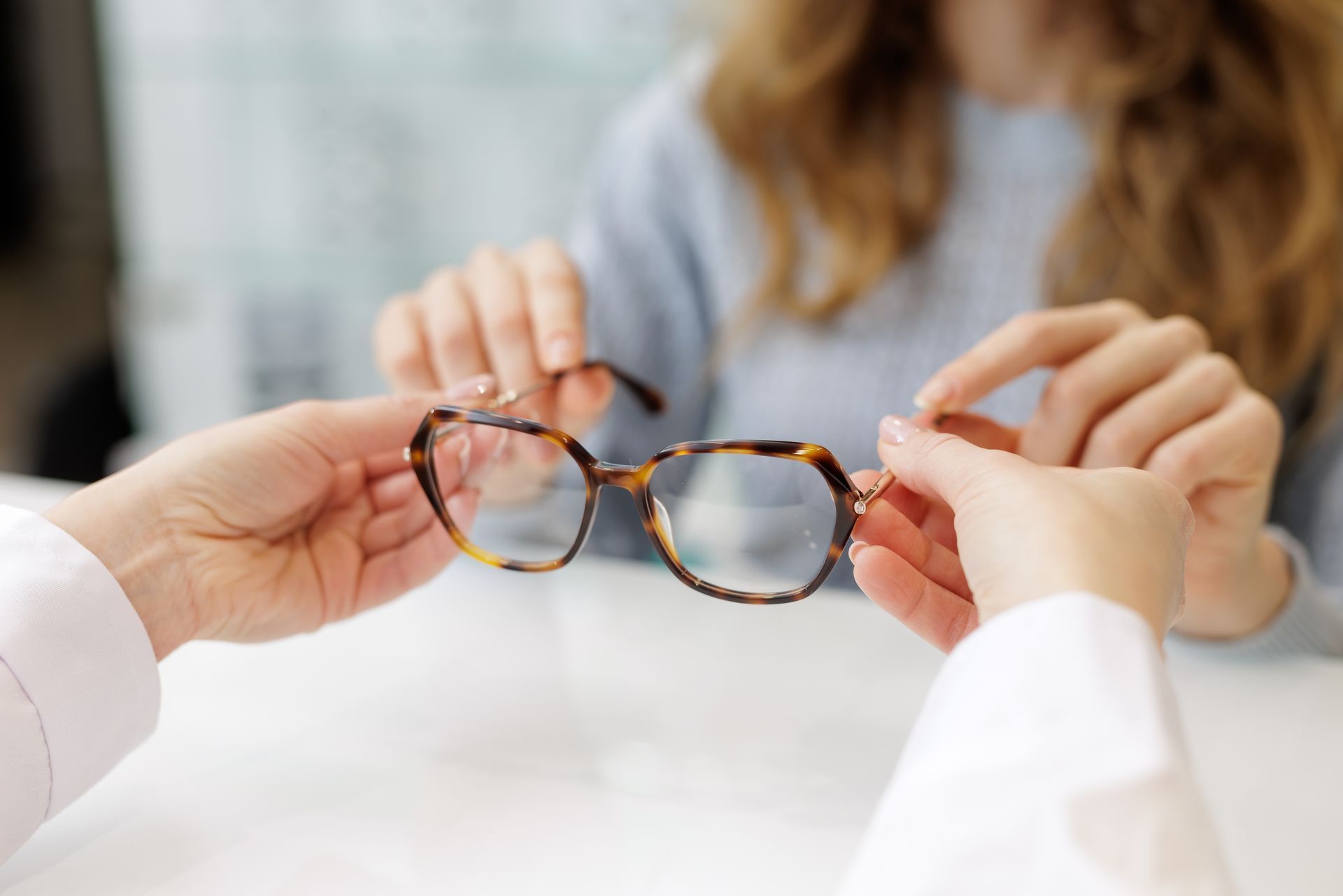
Choosing new glasses is one of those decisions that feels simple until you’re standing in front of a wall of frames and have no idea where to start. With over 600 frames in-store at Darling Downs Optometry in Toowoomba, the options are genuinely impressive — but that can also make the process feel overwhelming.
This guide gives you a practical starting point: what to consider, what questions to ask, and how our optical dispensing team can help you find frames that work for your prescription, your face, and your life.
Start With Your Prescription
Before you even think about style, your prescription matters. Certain lens types and prescriptions work better with certain frame shapes and sizes.
For stronger prescriptions (higher power lenses): Thicker lenses are more obvious at the edges of the frame. Smaller, rounder frames minimise the visible lens edge. Full-rim frames help contain the lens and reduce the appearance of thickness. Some materials — particularly high-index lenses — are thinner and lighter than standard plastic, making them worth considering for strong prescriptions.
For progressive lenses: The frame needs sufficient vertical depth (typically at least 28–30mm) to accommodate all three viewing zones. Narrow or very small frames won’t work well.
For single vision distance or reading: Almost any frame style can work, giving you the most flexibility in your choice.
Bring your prescription to the store (or book an eye test with us first), and our optical dispensers will flag any constraints before you spend time falling in love with a frame that won’t work for your lenses.
Face Shape as a Starting Point
Face shape is one of the most commonly cited guides to frame selection — and while it shouldn’t be a hard rule, it’s a useful starting point.
Oval face: The most versatile face shape. Most frame styles work well. Experiment freely.
Round face: Angular, rectangular, or square frames add definition and lengthen the face. Avoid very round or small frames, which emphasise roundness.
Square face: Round or oval frames soften strong jaw lines and angular features. Avoid very boxy or wide frames.
Heart-shaped face (wider forehead, narrow jaw): Frames that are wider at the bottom, or rimless and lighter styles, balance the face well. Avoid heavy top-heavy frames.
Oblong or rectangular face: Wider frames or those with decorative temples add width. Avoid very narrow frames that elongate the face further.
These are guidelines, not rules. Personal style, colouring, and how a frame actually sits on your specific features matter just as much.
Colour and Finish
Frame colour is largely personal, but a few practical considerations:
- Skin tone: Warm skin tones (golden, peachy, olive) tend to suit warm frame colours (tortoiseshell, gold, brown, warm reds). Cool skin tones (pink or blue undertones) suit cooler frames (black, silver, grey, blue, rose gold).
- Hair colour: Glasses worn close to the face interact with hair colour. Consider whether you want the frame to complement or contrast with your hair.
- Wardrobe: If you tend to wear a neutral wardrobe, a statement frame works well as an accessory. If your clothes are varied and colourful, a more neutral frame is versatile.
Frame Materials
Acetate (plastic): Lightweight, available in the widest range of colours and patterns, adjustable by heating. The most popular material for fashion eyewear. Very durable for most uses.
Metal (titanium, stainless steel, monel): Lighter and thinner than acetate. Titanium in particular is exceptionally lightweight, corrosion-resistant, and hypoallergenic — excellent for people with metal sensitivities. More understated aesthetic.
TR-90 (nylon/flexon): Extremely flexible and impact-resistant. Often used for children’s frames and sports eyewear. Very lightweight.
Mixed materials: Many contemporary frames combine acetate front frames with metal temples, offering the design possibilities of plastic with a lighter feel.
Practical Lifestyle Considerations
How you use your glasses matters:
- Active lifestyle: Look for robust frames with spring hinges and potentially rubberised grips. Lightweight materials are more comfortable for extended wear.
- Work (office, trades, medical): Different environments may require different considerations — professional settings versus physical work.
- Kids’ glasses: Prioritise durability. Flexible frames, spring hinges, and hypoallergenic materials are worth spending on.
- Driving glasses: Anti-reflective coatings are highly recommended for night driving.
The Buy-One-Get-One-Half-Price Offer
At Darling Downs Optometry, when you purchase one pair of prescription glasses, you can purchase a second frame at half price. This is a great opportunity to have:
- A dedicated pair of prescription sunglasses
- A backup pair at home or at work
- Reading glasses and computer glasses as separate pairs
- A fashion pair alongside a more conservative everyday pair
Ask our team about this offer when you come in.
Book a Frame Consultation in Toowoomba
Come and see us at 355 Ruthven Street, Toowoomba. Our experienced optical dispensers will work through your prescription, lifestyle, and personal style to find frames you’ll genuinely love wearing.
Call us on (07) 4638 8828 to arrange an appointment, or walk in during opening hours (Mon–Fri 9am–5pm, Sat 9am–12pm).
Darling Downs Optometry — 355 Ruthven Street, Toowoomba QLD 4350 —
(07) 4638 8828