Dry Eye Disease in Toowoomba: Causes, Symptoms, and Treatment Options
Dry eye disease is one of the most common eye conditions seen in optometry practices — and one of the most frequently underdiagnosed. If your eyes feel sore, gritty, watery, or tired by the end of the day, dry eye could be the cause.
At Darling Downs Optometry in Toowoomba, our therapeutically endorsed optometrists can assess and manage dry eye disease, providing relief that goes beyond over-the-counter drops.
What Is Dry Eye Disease?
Dry eye disease occurs when the eye doesn't produce enough tears, or when the tears produced are of poor quality and evaporate too quickly. The result is an unstable tear film that fails to protect and lubricate the surface of the eye adequately.
The tear film has three layers — an oily outer layer, a watery middle layer, and a mucous inner layer. Problems with any of these layers can contribute to dry eye.
There are two main types:
- Aqueous deficient dry eye: The lacrimal gland doesn't produce enough of the watery component of tears
- Evaporative dry eye: The most common type, usually caused by dysfunction of the meibomian glands (tiny oil-producing glands in the eyelids), leading to rapid evaporation of the tear film
Many patients have a combination of both.
Common Symptoms of Dry Eye Disease
Dry eye symptoms can vary considerably between patients. Common complaints include:
- Burning, stinging, or soreness in the eyes
- A gritty or foreign body sensation ("something in my eye")
- Redness
- Excessive watering or tearing (a reflex response to dryness)
- Blurred vision that fluctuates or clears with blinking
- Eye fatigue or difficulty keeping the eyes open
- Sensitivity to wind, air conditioning, or smoke
- Difficulty wearing contact lenses
- Worsening symptoms toward the end of the day or after screen use
What Causes Dry Eye?
Dry eye is more common with age, but it can affect people of all ages. Contributing factors include:
- Age: Tear production naturally decreases with age
- Hormonal changes: Menopause, pregnancy, and hormonal contraception can all affect tear production
- Screen use: Reduced blink rate during computer or phone use leads to faster tear evaporation
- Environment: Air conditioning, heating, fans, and dry or windy climates (like inland Queensland) are common triggers
- Contact lens wear: Lenses can disrupt the tear film and accelerate evaporation
- Medications: Antihistamines, antidepressants, blood pressure medications, and some other drugs can reduce tear production
- Medical conditions: Rheumatoid arthritis, Sjögren's syndrome, thyroid disease, and rosacea are associated with dry eye
- Previous eye surgery: LASIK and other refractive procedures can temporarily or permanently affect tear function
How Is Dry Eye Assessed?
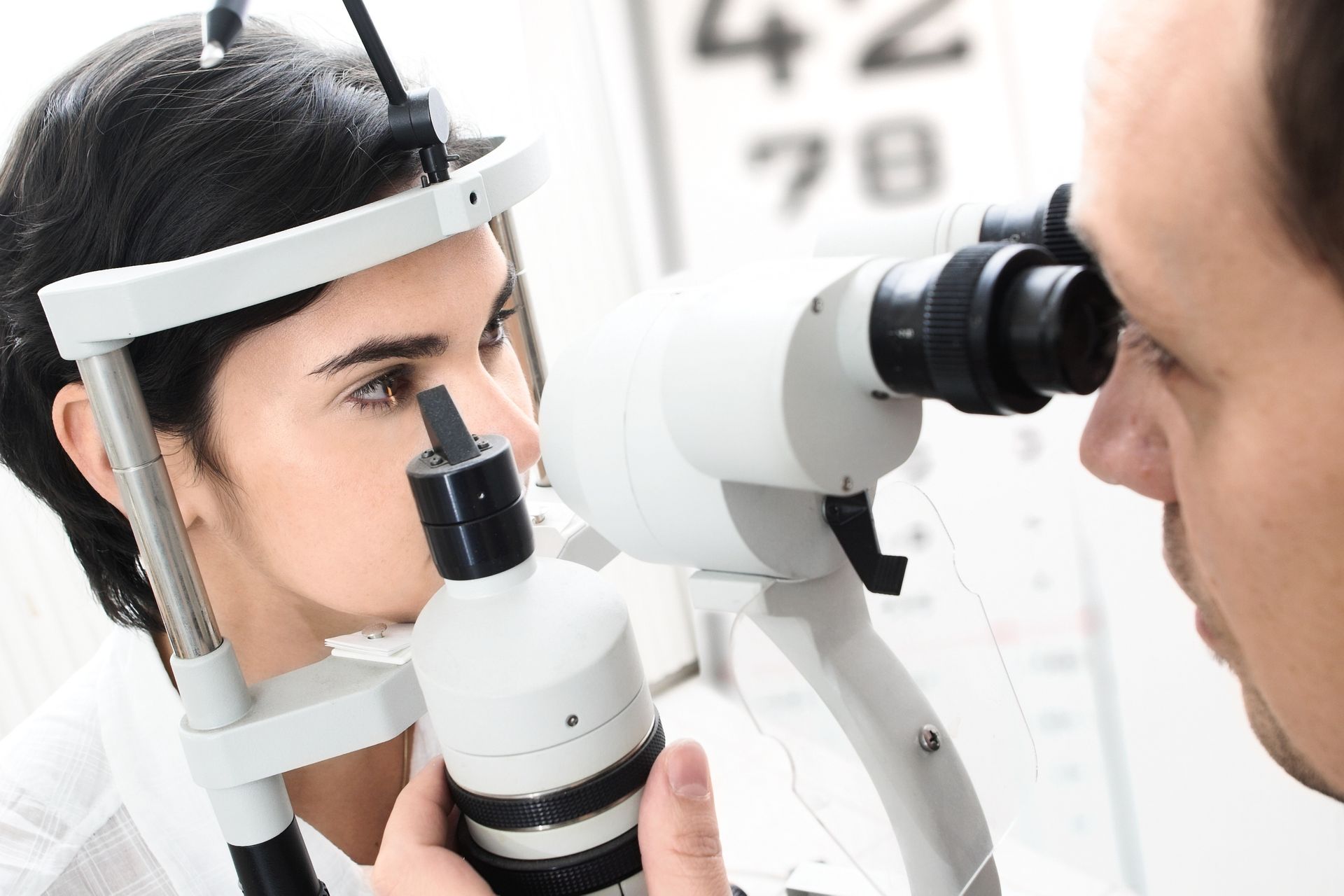
Our optometrists use several tests to assess the type and severity of your dry eye:
- Tear break-up time: Measures how quickly the tear film destabilises after blinking
- Meibomian gland assessment: Evaluating the function and quality of the oil-producing glands in the eyelids
- Ocular surface staining: Using special dyes to visualise damage to the surface of the eye
- Schirmer's test: Measures the volume of tear production
Treatment Options for Dry Eye
There is no single universal treatment for dry eye — the most effective approach depends on the underlying cause, severity, and patient circumstances.
Lubricating eye drops: A useful first step, but the type of drop matters. Preservative-free drops are gentier on the eye surface for regular use. We can advise on the most appropriate formulation.
Warm compresses and lid hygiene: For meibomian gland dysfunction (evaporative dry eye), warming the eyelids and clearing the gland openings can significantly improve the quality of the oily tear layer.
Omega-3 supplementation: Evidence supports the use of high-quality omega-3 supplements in improving meibomian gland function and reducing inflammation.
Prescription treatments: As therapeutically endorsed optometrists, we can prescribe anti-inflammatory eye drops (such as topical cyclosporine) and other medicated treatments where clinically indicated — without requiring a GP referral.
Punctal plugs: Tiny plugs that partially block the tear drainage ducts, keeping more tears on the eye surface. A simple procedure with immediate effect.
Lifestyle modifications: Adjusting screen habits, workstation setup, hydration, and contact lens wear can all contribute meaningfully to symptom relief.
Book a Dry Eye Assessment in Toowoomba
If your eyes are consistently uncomfortable, don't rely on over-the-counter drops indefinitely without a proper assessment. Call Darling Downs Optometry on (07) 4638 8828 or book online. We're at 355 Ruthven Street, Toowoomba and can arrange a thorough dry eye evaluation with our experienced team.
Darling Downs Optometry — 355 Ruthven Street, Toowoomba QLD 4350 —
(07) 4638 8828