What Is an OCT Eye Scan and Do You Need One? A Toowoomba Patient's Guide
You may have heard your optometrist mention an OCT scan — or been recommended one during a routine eye appointment. But what exactly is it, why is it recommended, and should you have one?
At Darling Downs Optometry in Toowoomba, we use OCT as part of our advanced eye health assessments. Here's everything you need to know.
What Is OCT?
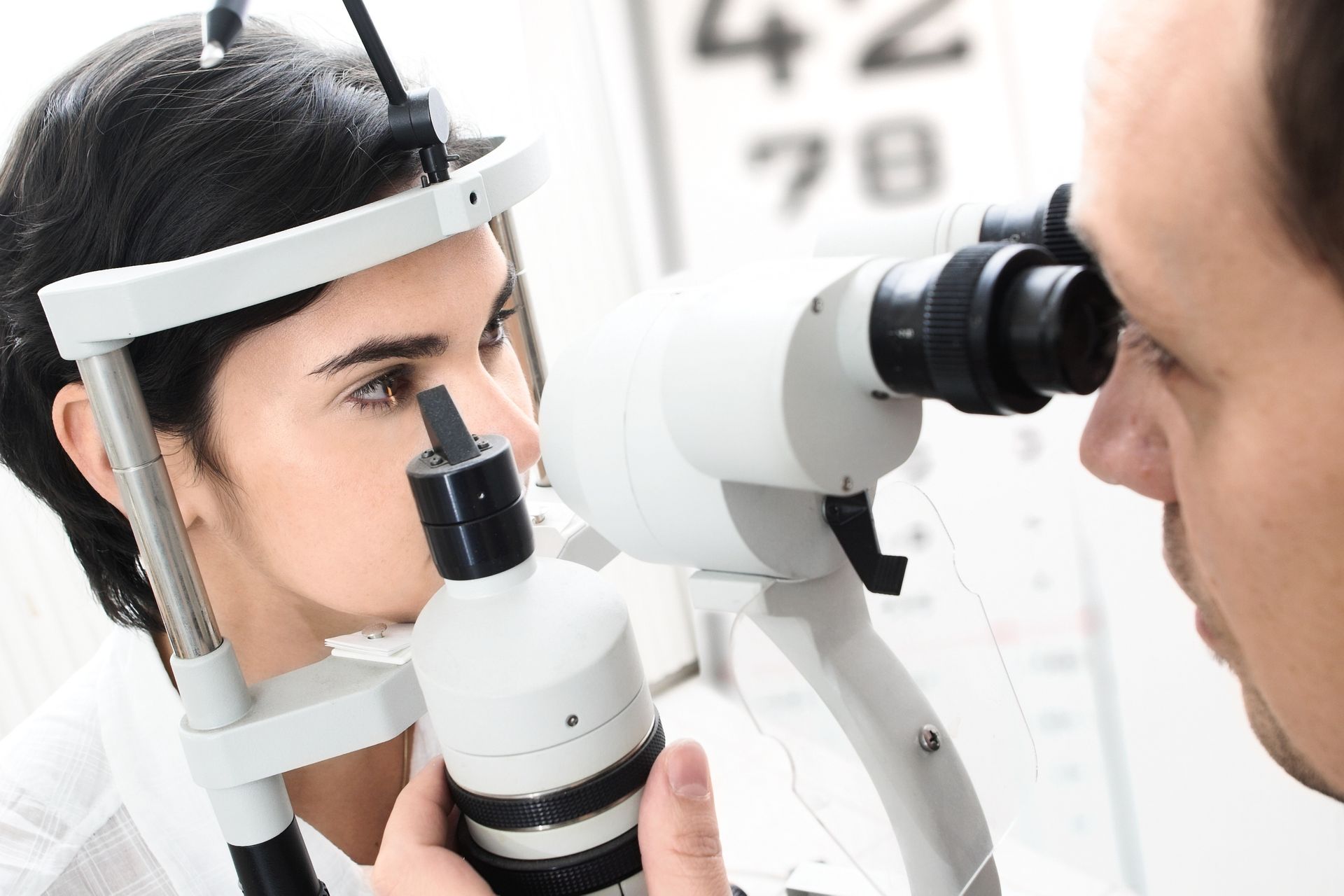
OCT stands for Optical Coherence Tomography. It's a non-invasive imaging technology that uses light waves to produce high-resolution, cross-sectional images of the structures inside your eye — primarily the retina and optic nerve.
Think of it like an ultrasound, but for your eye, using light instead of sound. It allows your optometrist to see microscopic layers of tissue in extraordinary detail — detail that cannot be seen with the naked eye or even standard photography.
The scan is completely painless, takes less than five minutes, and doesn't require eye drops in most cases.
What Can OCT Detect?
OCT is a powerful diagnostic tool for a range of serious eye conditions:
Glaucoma OCT provides detailed measurement of the retinal nerve fibre layer (RNFL) — the tissue most affected by glaucoma. It can detect thinning of this layer before visual field loss occurs, meaning we can identify glaucoma at its earliest detectable stage, when treatment is most effective.
Age-Related Macular Degeneration (AMD) OCT can detect subtle fluid, drusen deposits, and structural changes in the macula that indicate early AMD — including wet AMD, where fluid accumulation beneath the retina requires urgent treatment.
Diabetic Macular Oedema In patients with diabetes, OCT can measure the thickness of the macula and detect fluid accumulation (macular oedema) that may be affecting or threatening central vision.
Epiretinal Membrane A thin layer of fibrous tissue that can grow on the surface of the retina, causing distortion or blurring of central vision. Clearly visible on OCT.
Macular Hole A small break in the macula that causes a blank or distorted spot in central vision. Diagnosed clearly with OCT.
Vitreomacular Traction An attachment between the vitreous gel and the macula that can cause distortion or vision loss.
Who Should Have an OCT Scan?
We may recommend an OCT scan for you if:
- You have a family history of glaucoma or macular degeneration
- You are over 50
- You have diabetes
- Your optometrist has identified a suspicious change in your optic nerve or macula
- You have reported visual disturbances such as wavy lines, a central blind spot, or missing patches of vision
- You are highly short-sighted (myopia increases the risk of retinal conditions)
- You are taking medications known to affect the retina (e.g., hydroxychloroquine)
Annual OCT monitoring is also recommended for patients already diagnosed with glaucoma, AMD, or other progressive conditions, to track any changes over time.
Is OCT Covered by Medicare?
In most cases, OCT is not covered by the standard Medicare eye test rebate — it is an additional service with a separate fee. However, it is one of the most valuable tests available for early detection of sight-threatening conditions, and many patients consider the cost well worthwhile.
Our team will always discuss costs with you before proceeding and explain why the test is being recommended in your specific situation.
How to Book an OCT Scan in Toowoomba
OCT is available at Darling Downs Optometry as part of a comprehensive eye health assessment. Call us on (07) 4638 8828 to book, or ask about adding an OCT scan to your next eye appointment.
We are located at 355 Ruthven Street, Toowoomba QLD 4350.
Darling Downs Optometry — 355 Ruthven Street, Toowoomba QLD 4350 —
(07) 4638 8828